The conversation about AI and work has mostly focused on replacement. Which jobs will disappear? Which workers will be displaced? Which companies will use AI to cut headcount? That conversation is no longer theoretical. It is showing up in how companies hire, reorganize, and decide what work still requires people.


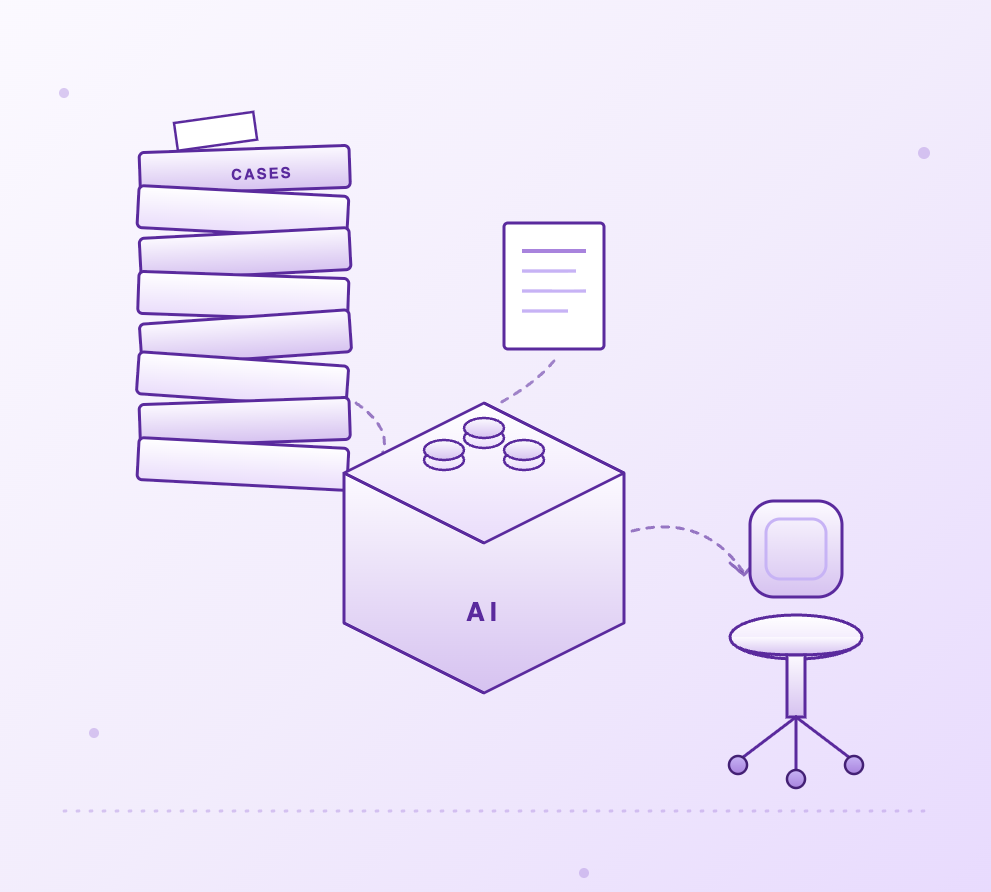
The conversation about AI and work has mostly focused on replacement.
Which jobs will disappear? Which workers will be displaced? Which companies will use AI to cut headcount?
That conversation is no longer theoretical. It is showing up in how companies hire, reorganize, and decide what work still requires people. IBM said in 2023 that it would pause or slow hiring for some back-office roles that could be automated, with its CEO estimating that roughly 30 percent of certain non-customer-facing functions could be replaced by AI and automation over five years; by 2025 the company said AI had taken over the work of a few hundred HR staff, even as its total headcount rose because it redirected the savings into other roles. Klarna said its AI assistant handled two-thirds of its customer service chats in its first month, doing work it described as equivalent to 700 full-time agents — though by 2025 it had reversed course, with its CEO conceding that the AI-first approach had produced lower-quality service and that the company was rehiring human agents. Recent layoff reporting has put Meta and other large firms into the same broad category: companies cutting or restructuring work while investing heavily in AI.
Some of this deserves skepticism. Not every layoff with "AI" in the press release is actually caused by AI. Companies overhired during the pandemic. Interest rates changed. Investors demanded efficiency.
But that surface-level explanation misses the more important change. AI is not just giving companies a reason to fire people. It is giving them a new way to avoid hiring them in the first place.
For decades, the answer to rising workload was simple: add staff. More customers meant more support agents. More transactions meant more processors. AI changes that equation because it creates a new option between "hire another person" and "let the work pile up."
That is the shift now moving toward government. And in government, it may matter even more.
The private sector is showing the first version of this shift. It does not always look like a dramatic robot-for-worker swap. It looks like hiring freezes, attrition, smaller teams managing larger volumes, and routine work being redesigned around AI-assisted workflows.
A company does not need to replace an entire job description to change its workforce. It only needs to automate enough tasks that the old staffing model stops making sense. That is why the most important signal may not be layoffs. It may be the quiet disappearance of future hires.
This distinction matters because government is not starting from the same place as the private sector. The private sector often frames AI as a margin story. Government will experience it as a capacity story.
Public agencies are not entering the AI era from abundance. They are already understaffed. They already struggle to recruit. They operate under budget rules that make it hard to compete with private-sector salaries. Many have been asked for years to do more with less, even as populations grow.
MissionSquare Research Institute's 2025 state and local workforce survey, summarized by ICMA and public-sector HR organizations, found that recruiting challenges have improved from the worst of the pandemic period but remain persistent, especially in hard-to-fill roles such as engineering, IT, policing, corrections, skilled trades, health care, and maintenance. The same workforce picture includes retirements, which can take institutional memory with them.
This is the real context for AI in government. Not a world where agencies are sitting on bloated workforces and looking for excuses to cut them. A world where positions are already empty.
A planner retires and the city cannot replace her. A benefits office has open caseworker positions but no budget authority to fill them. A permitting department has applications waiting because review staff are overloaded.
The bottleneck is not ambition. It is capacity.
That is why the public-sector AI opportunity is different. The most meaningful use case is not replacing public servants. It is increasing the throughput of public institutions.
Government work is full of tasks that are essential but not especially judgment-heavy: reading applications, checking missing documents, summarizing meetings, drafting routine letters, routing requests, searching policy manuals, translating notices, preparing inspection summaries, and responding to common resident questions.
None of these tasks, by themselves, define public service. Together, they consume a large share of public-sector attention.
This is where agentic AI matters. A chatbot answers a question. An agentic system can help move a process. It can read an intake form, identify missing documents, draft a resident response, check the relevant policy, flag exceptions, create a task for a human reviewer, and update the case record.
The point is not to remove humans from government. The point is to remove avoidable drag around the humans.
That distinction is critical. Public agencies do not just process transactions. They exercise judgment. They interpret rules. They balance equity, law, risk, precedent, budget, and public trust. Those are not edge cases. They are the work.
But many agencies spend scarce human judgment on nonjudgment work. A caseworker should not spend half the morning hunting for the same missing document across five systems. A planner should not manually retype information that already exists in an application.
AI should not decide who receives benefits. But it can help a caseworker see the relevant history faster. AI should not approve a building permit. But it can identify missing documents before the application sits untouched for three weeks. AI should not replace a public information officer. But it can draft routine updates so humans can verify facts and coordinate clearly.
The better question is not "Can AI do the job?" It is "Where is the agency using human capacity on work that does not require human judgment?"
There is also a dangerous version of this story. In that version, agencies use AI as a budget workaround. They cut staff, buy tools, and hope software fills the gap. Residents are pushed into automated systems that are difficult to understand, difficult to appeal, and easy to blame on "the algorithm." The labor does not disappear. It moves from paid staff to residents, often to the people least able to absorb it.
That is not modernization. It is austerity with a user interface.
The governance problem is central because AI can increase capacity and hide capacity failures at the same time. It can help workers, but it can also intensify work. It can reduce backlogs, but it can also create faster bad decisions. It can make services easier to access, but also create new barriers for residents who need help, translation, or an exception.
This is why public-sector AI cannot be treated as just another software purchase. It is a redesign of administrative power.
Agencies need clear rules for where AI can assist, where humans must decide, how residents can appeal, how errors are audited, and how workers are trained. The governance layer is not a compliance afterthought. It is the thing that determines whether AI expands public capacity or weakens public accountability.
The first real workforce impact in government will likely come through vacancies. A department with ten budgeted roles and seven filled positions may use AI to survive without filling all three. A permitting office may reduce review time without adding planners. A call center may use AI to answer routine questions because hiring bilingual agents is difficult.
This is still a workforce impact. It just does not look like a layoff. It looks like a job that never reopens, a junior role that becomes harder to justify, or a smaller team handling a larger community.
In some cases, that may be necessary. But it should be named honestly. "Doing more with less" has been the public-sector mantra for years, and the result has often been burnout, backlogs, and declining trust.
The better promise is more specific: AI can help agencies do more of the right work with the limited people they already have.
That is a capacity argument, not a replacement argument. Communities are growing. Service demand is rising. Budgets are tight. Salaries often lag the private sector. Residents increasingly expect government to operate with the clarity and speed of the best digital services they use elsewhere.
That gap cannot be closed by hiring alone. It also cannot be closed by technology alone.
The agencies that get this right will not start with the model. They will start with the workflow. Where are residents waiting? Where are employees duplicating effort? Where does information get trapped? Where do rules require judgment? Where does the agency need speed, and where does it need deliberation?
Then they will place AI around those constraints. Not as a replacement for public servants. As infrastructure for public work.
The real question is not whether AI will replace government workers. Some tasks will be automated. Some roles will change. Some positions may never come back. The real question is whether government can use AI to rebuild administrative capacity without eroding public accountability.
Technology is rarely the story. The story is the system around it.
.svg)
%20(1).png)